
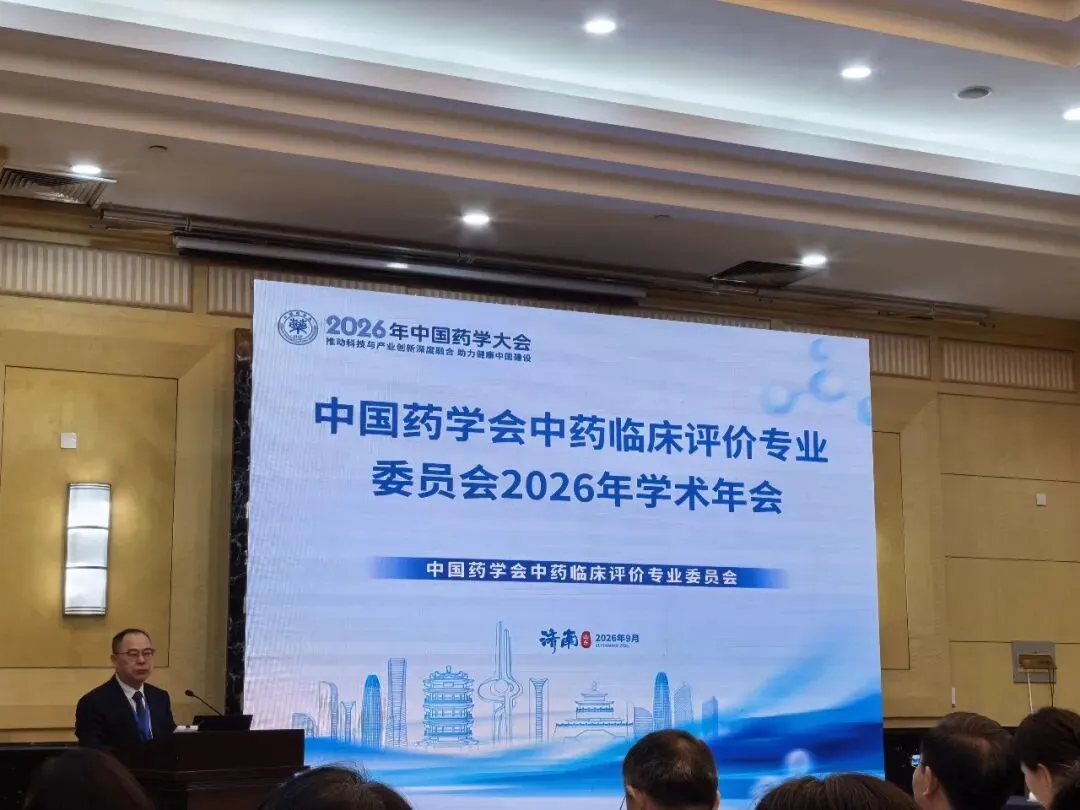
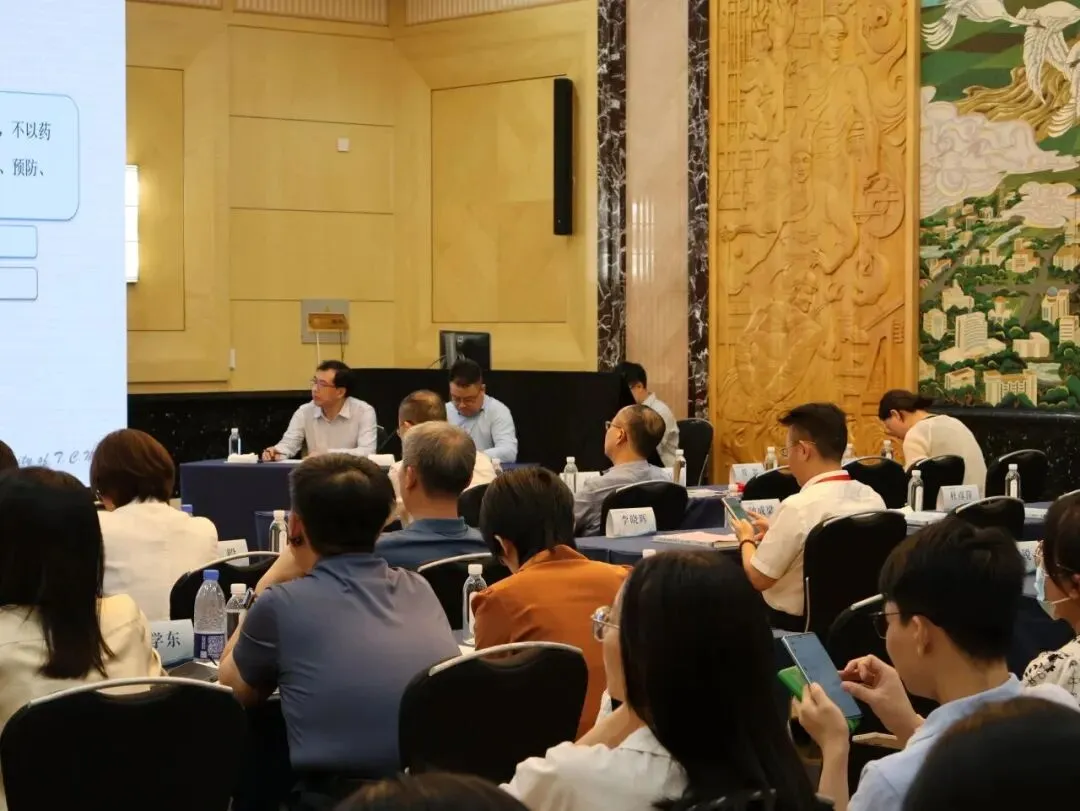
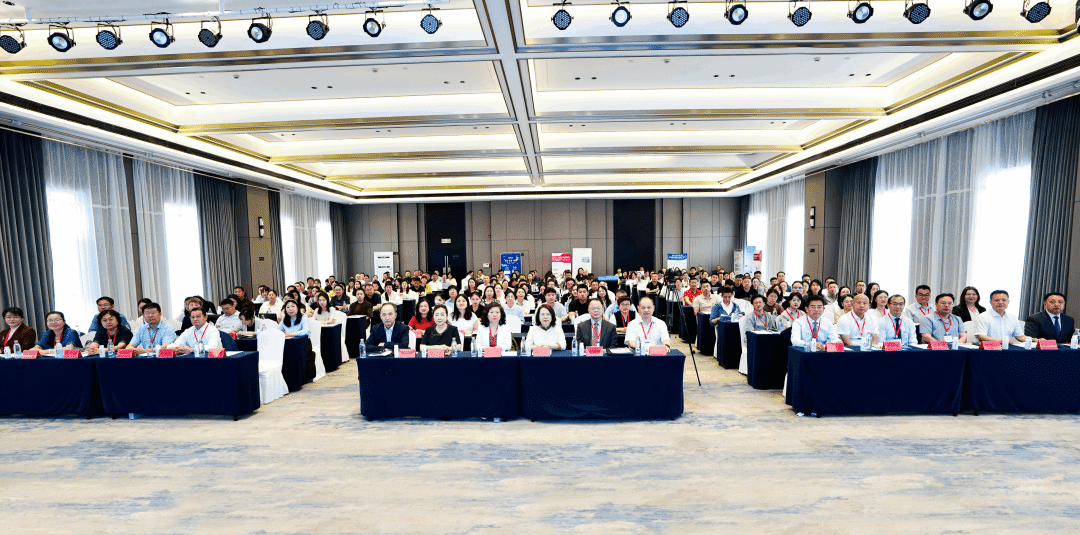
On September 5, 2026, the 2026 Academic Annual Meeting of the TCM Clinical Evaluation Professional Committee was held at the Shandong Mansion. Renowned experts in the field of TCM clinical evaluation across the country gathered in Jinan to conduct in-depth discussions on frontier hotspots and key issues in new TCM drug R&D, building consensus for promoting the high-quality development of the TCM clinical evaluation system.
This meeting coincided with the opening year of the "15th Five-Year Plan," closely following the strategy for the inheritance and innovation of traditional Chinese medicine, and is of great significance for improving the evaluation system for new TCM drug R&D.
Methodological Innovation, Consolidating the Foundation of Clinical Practice
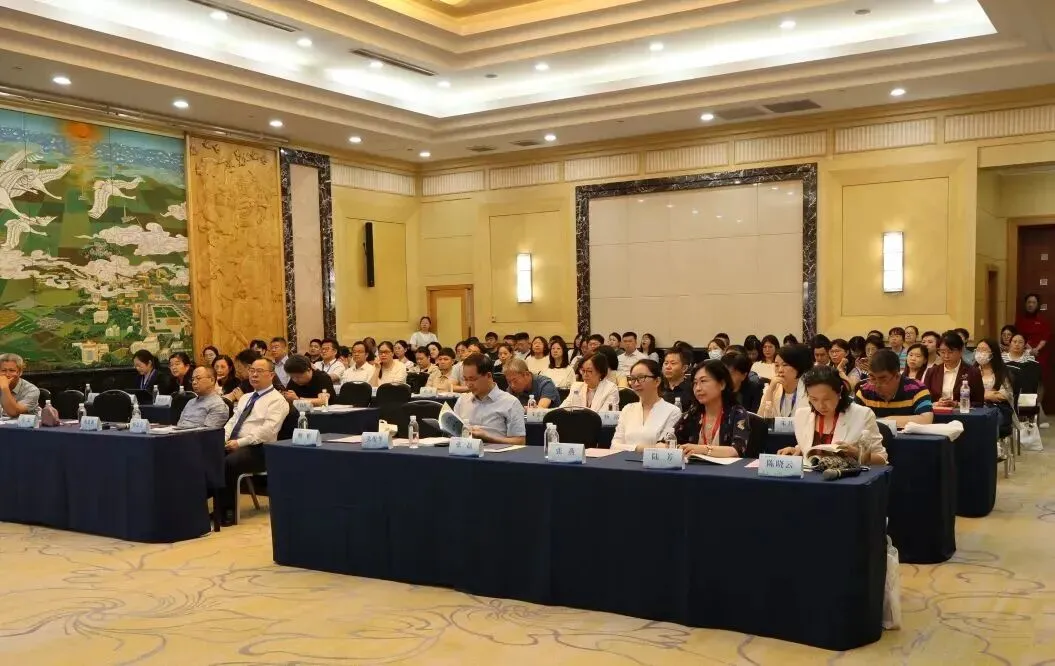
In the morning, the academic annual meeting (Venue 17) opened in the Dongying Hall. Professor Yang Zhongqi presided over the opening session, and Secretary-General Dun Bin of the Chinese Pharmaceutical Association delivered a speech, affirming the committee's annual work achievements and looking forward to future development. The morning session focused on methodological innovation and standardized practice in clinical trials of new TCM drugs.
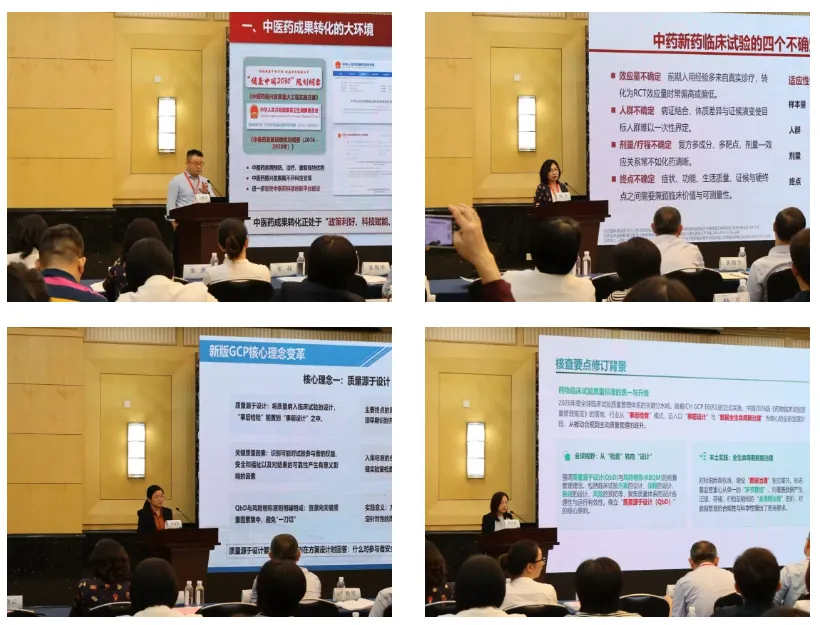
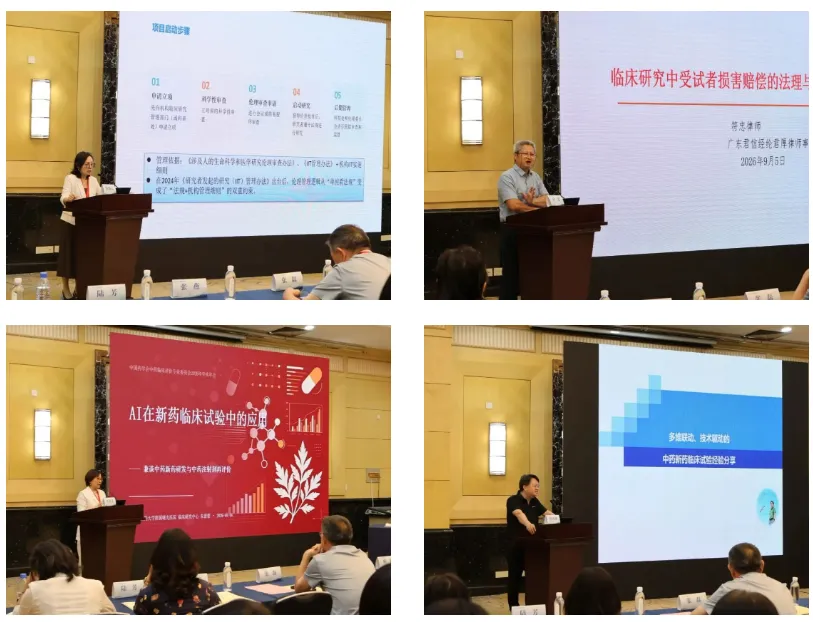
Professor Zhang Junhua of Tianjin University of Traditional Chinese Medicine analyzed the opportunities and challenges of decentralized new drug clinical trials; Professor Yuan Weian of Shuguang Hospital Affiliated to Shanghai University of Traditional Chinese Medicine provided an in-depth explanation of reflections and practices on the transformation of TCM scientific research achievements; Professor Mu Huijuan of Shandong Provincial Hospital of Traditional Chinese Medicine explained the practical requirements of the new version of GCP with case studies; Professor Lu Fang of Xiyuan Hospital of the China Academy of Chinese Medical Sciences shared methodological experience in adaptive design; Professor Du Yanping of the First Affiliated Hospital of Guangzhou University of Chinese Medicine systematically explained the new requirements for clinical trial registration inspection.
Diverse Discussions, Gaining Insight into Frontier R&D Directions
The afternoon session expanded to frontier fields such as investigator-initiated clinical research, artificial intelligence applications, and drug R&D for special populations.
Professor Chen Xiaoyun of Longhua Hospital Affiliated to Shanghai University of Traditional Chinese Medicine discussed key points of scientific and ethical review in TCM IIT research; Lawyer Fu Zhong of Junxin Jingwei Junhou Law Firm shared legal practice in damage compensation for IIT research with case studies; Professor Zhu Leilei of Shuguang Hospital Affiliated to Shanghai University of Traditional Chinese Medicine presented the application progress of AI in new drug clinical trials; Professor Zhong Chengliang of the First Affiliated Hospital of Tianjin University of Traditional Chinese Medicine shared experience in clinical trials of new TCM drugs for children; Professor Li Dongying of the National Medical Products Administration Institute of Executive Development interpreted the expert consensus on structured benefit and risk assessment across the full lifecycle of new TCM drugs.
Finally, Professor Yang Zhongqi delivered a keynote speech titled "Discovery of Clinical Needs and Value Expression of New TCM Drugs." Combining rich clinical and scientific research practice, he pointed out that new TCM drug R&D should be based on real clinical needs, focus on patients to explore the unique therapeutic value of traditional Chinese medicine, and systematically elaborated the methodological framework for value expression of new TCM drugs from three dimensions: theoretical system, clinical evidence, and transformation pathways, winning high praise from experts present.
Research-Oriented Pharmacy — A Vivid Practice of the Fully DCT Model
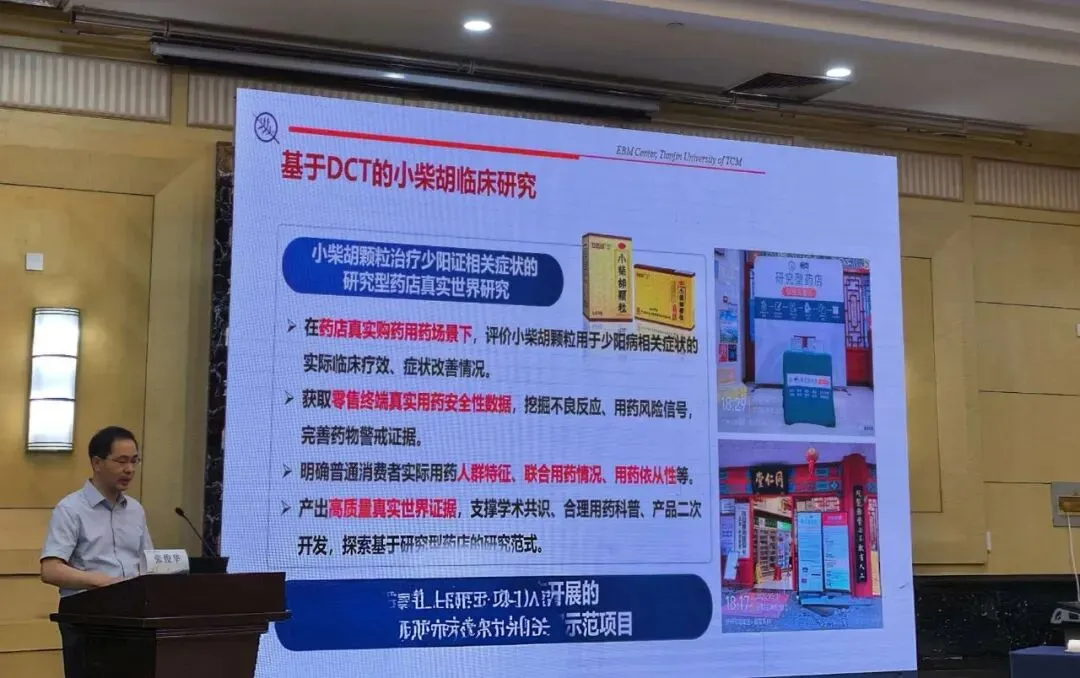
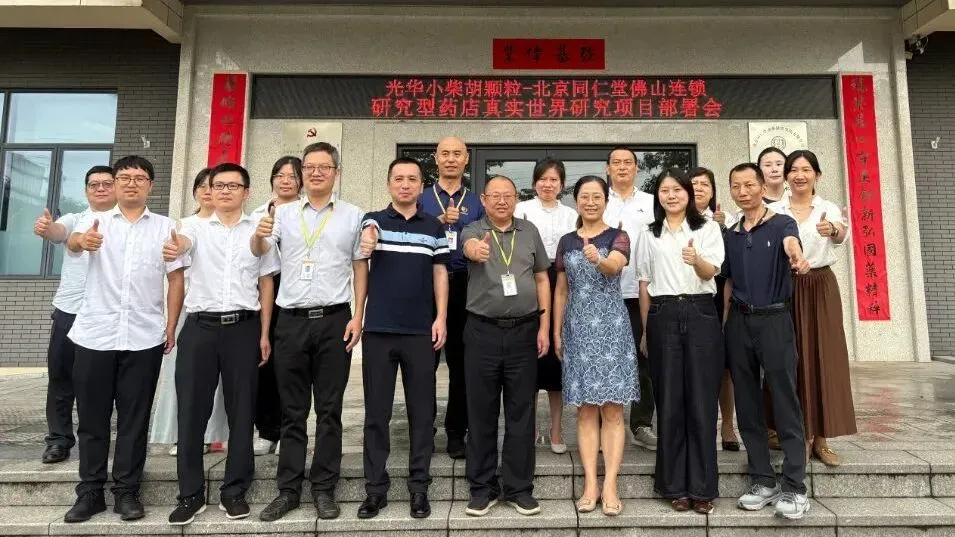
In the report by Vice President Zhang Junhua of Tianjin University of Traditional Chinese Medicine, the research-oriented pharmacy project was specifically mentioned as a vivid practice of decentralized research in traditional Chinese medicine. He pointed out that the background pain point of conducting this research is that traditional clinical trials of TCM OTC products in hospitals often face difficulties, but the medication population has always had intuitive feelings about their efficacy, lacking systematic feedback and value discovery channels. Joining forces with large chain pharmacies with 700,000 stores, screening stores with a "front shop, back clinic" structure, having 15 square meters of independent space, and capable of basic examinations (blood pressure, tongue image, etc.) as "research-oriented pharmacies" is one of the important explorations of new scenarios for TCM product value discovery.
In this project, Guangzhou Evidence-Based Medicine Technology Co., Ltd. is fully responsible for research protocol design and ethical review, designing and deploying the DCT system to support efficient collection and management of real-world data, organizing personnel training and assessment, and providing full-process technical support. At present, a quality control system for such projects has been established based on practice, aiming to open up channels for discovering the clinical value of traditional Chinese medicine, allowing patients to conveniently provide feedback on efficacy and adverse reactions after purchasing drugs, and exploring a new path for decentralized TCM clinical evaluation.
The successful convening of this annual meeting injected new momentum into the high-quality development of the TCM clinical evaluation system and pointed out the direction for the industry's innovative practice during the "15th Five-Year Plan" period.
With a professional and efficient service system and a comprehensive operational network, Guangzhou Evidence Based Medicine is committed to providing tailored one-stop traditional Chinese medicine research and development full industry chain service solutions for every customer, promoting traditional Chinese medicine to the world and safeguarding the health of more people.
