Insight into Hong Kong & Macao, Building Bridges for Global Expansion" — Evidence-Based Research on the Hong Kong and Macao Registration Pathways for Pharmaceutical Enterprises in the Greater Bay Area
Release Date:2026-07-25

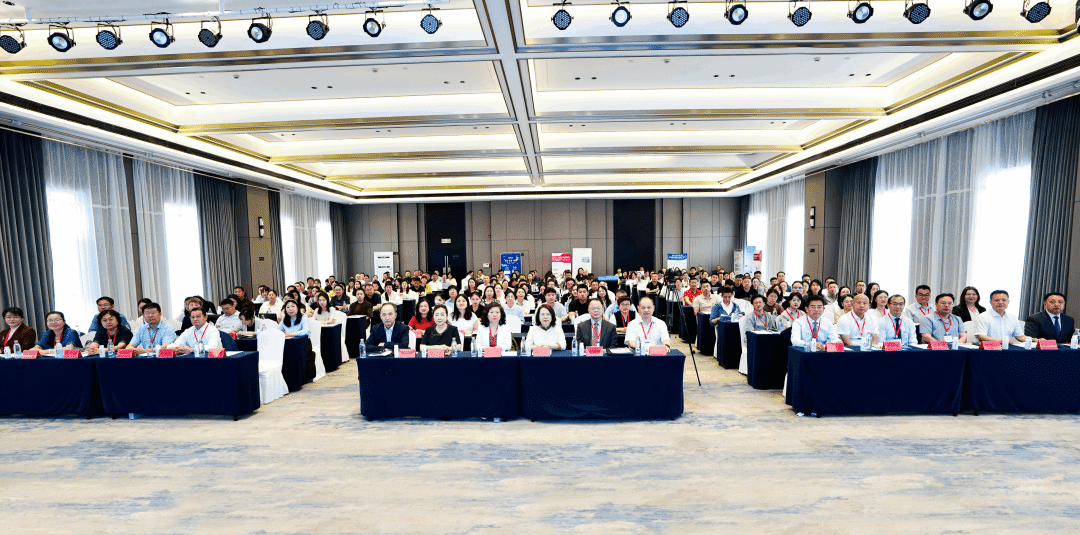
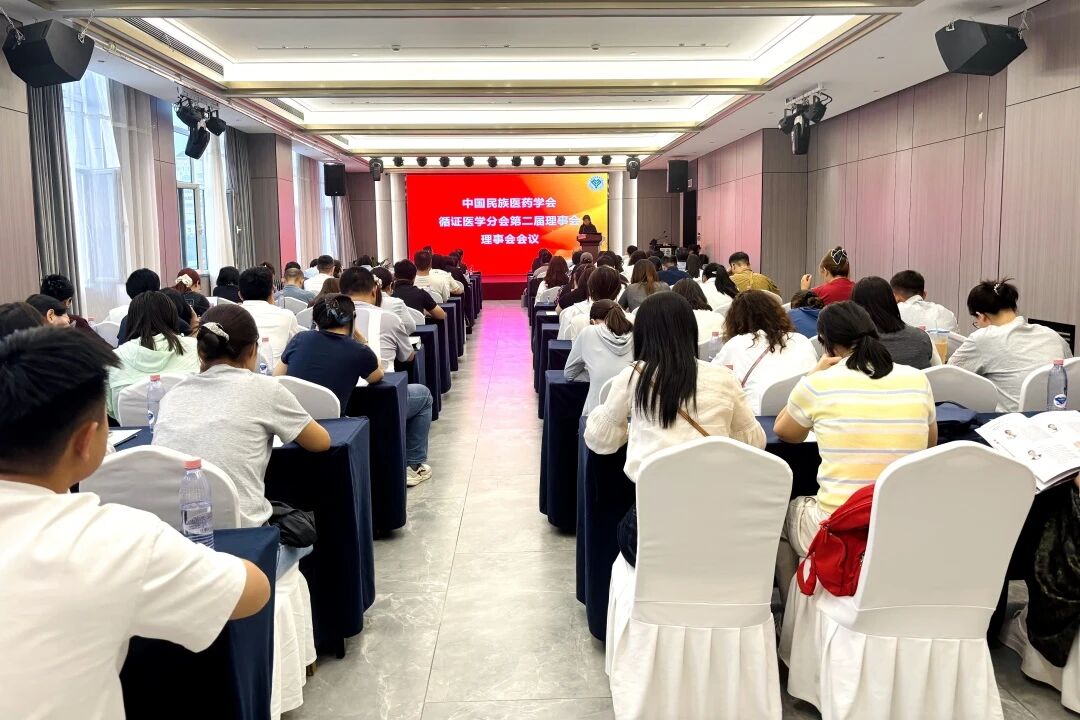
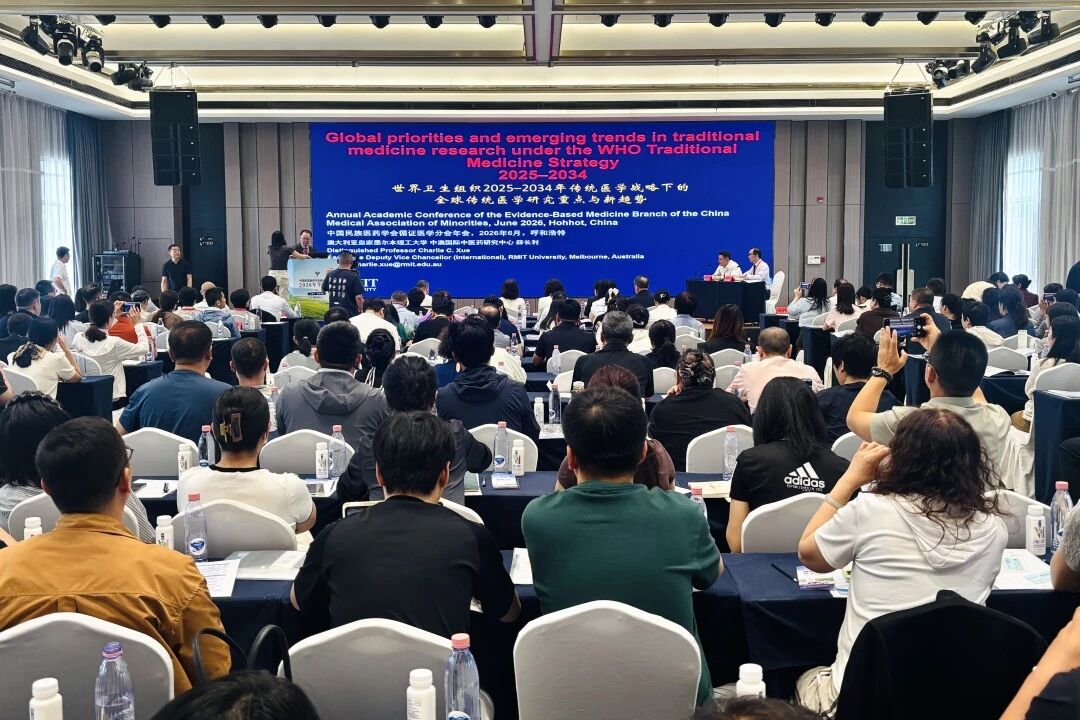
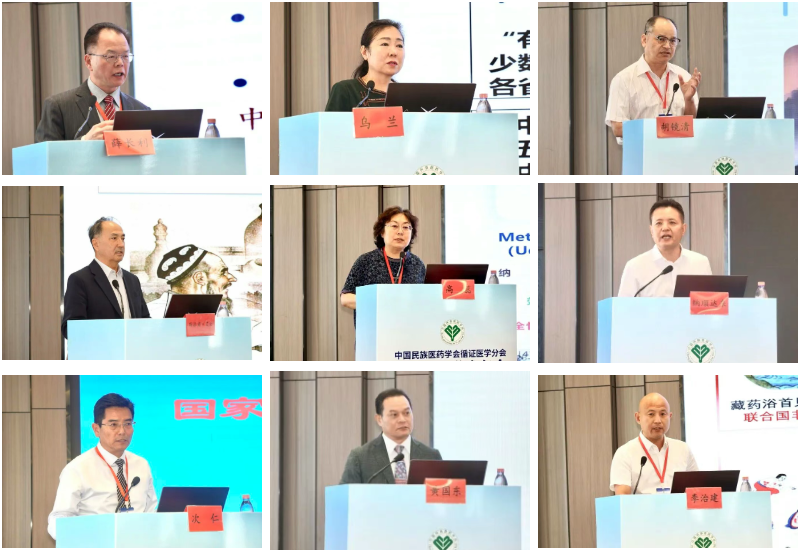
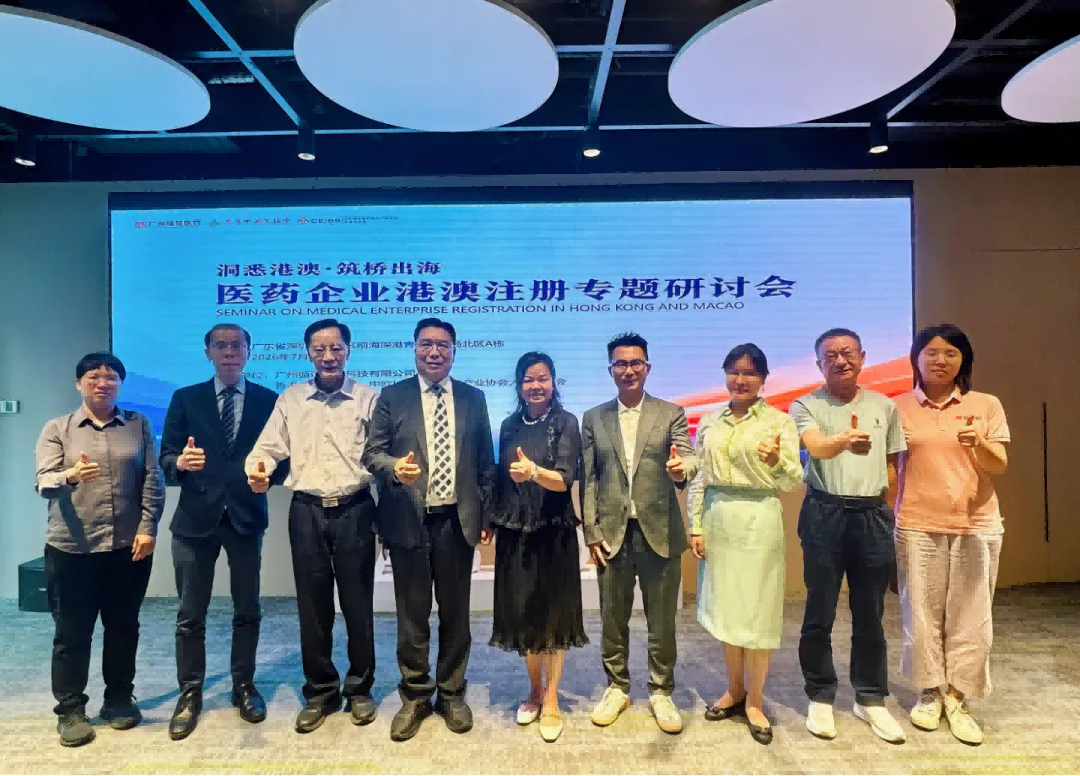
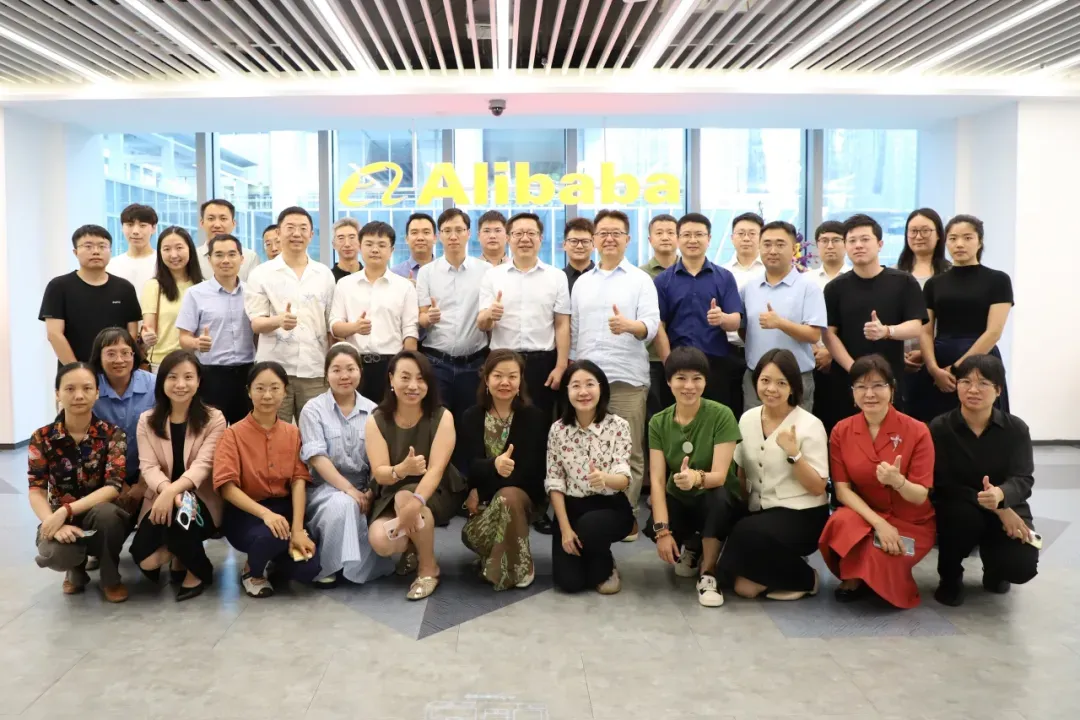
On July 24, a specialized seminar on Hong Kong and Macao registration, exclusively hosted by Guangzhou Evidence-Based Medicine Technology Co., Ltd. and co-organized by the Greater Bay Area Chapter of the CEIBS Alumni Healthcare Industry Association (CAHA) and the Hong Kong Chinese Medicine Industry Association, was held at the Qianhai Shenzhen-Hong Kong Youth DreamWorks in Shenzhen. The conference focused on the regulatory differences in drug registration among Guangdong, Hong Kong, and Macao, as well as common cross-border compliance challenges facing the industry, establishing an in-depth dialogue platform for pharmaceutical companies, clinical institutions, and leading industry experts.


The event brought together R&D, registration, and marketing heads from Greater Bay Area-listed TCM enterprises such as Baiyunshan, China Resources Sanjiu, and Kangchen Pharmaceutical, along with research commercialization leads from top-tier TCM hospitals, cross-border compliance service providers, and numerous other industry professionals. As the Guangdong-Hong Kong-Macao Greater Bay Area has risen to become a national-level core vehicle for TCM internationalization, the dual challenges of "mainland pharmaceutical companies lacking compliance channels for going global" and "Hong Kong and Macao time-honored brands facing cumbersome approval processes for re-entering the mainland" have become increasingly prominent. This seminar, grounded in real-world application experience and authentic review case studies, provided a complete breakdown of three differentiated pathways—Hong Kong HKC formal drug registration, Macao's distinctive non-drug filing, and Greater Bay Area two-way simplified registration—offering a standardized implementation blueprint for domestic TCM enterprises to establish a complete commercial pathway from "mainland R&D and manufacturing – Hong Kong/Macao compliance springboard – two-way circulation in domestic and international markets."


Opening Address: Anchoring the Mission of "Compliance-Driven Global Expansion" and Accelerating Hong Kong/Macao Registration


17859875185844098.webp


"Hong Kong and Macao are the 'bridgeheads' and 'testing grounds' for mainland enterprises to go global. The core of today's policy seminar is to help companies solve the 'compliance' pain point—only by first 'entering Hong Kong and Macao' can we 'reach the world.'"


Nie Sijiang, Executive Vice President and Secretary-General of the CEIBS Alumni Healthcare Industry Association (CAHA), highlighted the current context: with the Greater Bay Area development in full swing and policy dividends emerging frequently, the most fundamental challenge for enterprises remains "how to legally and compliantly enter the Hong Kong and Macao markets." She expressed her hope that this seminar would transform policies from mere "documents" into actionable "pathways" for businesses.


Dr. Zhou Jie, General Manager of Guangzhou Evidence-Based Medicine Technology Co., Ltd., noted that "this year marks a milestone in the development of the TCM industry, with a surge in corporate inquiries—but 'compliance' is the prerequisite. Today, we have invited leading experts at the forefront of Hong Kong and Macao registration to deliver a full-chain interpretation from 'policy panorama' to 'implementation details.'"


She emphasized that this seminar was not merely about "information dissemination," but also "resource matching"—aiming to help companies avoid detours and identify the bridge from "entering Hong Kong and Macao" to "going global."


Hong Kong HKC Registration: New Tiered Review Policy Implementation, Building a Credibility Endorsement for TCM Internationalization


17859875499005661.webp

▲ Mr. Li Yingsheng, President of the Hong Kong Chinese Medicine Industry Association


The first keynote presentation was delivered by Mr. Li Yingsheng, President of the Hong Kong Chinese Medicine Industry Association and a Hong Kong deputy to the National People's Congress, who provided a comprehensive interpretation of Hong Kong's TCM registration policies, combining his top-level policy engagement and firsthand research perspectives to thoroughly analyze Hong Kong's TCM industry foundation and the 2026 new review reform details.


Industry fundamentals directly reflect the need for regulatory upgrading: as of May 2026, Hong Kong has 8,826 registered TCM practitioners and 2,015 listed practitioners; 4,913 TCM retail merchants; and over 2,800 wholesalers of Chinese herbal medicines and Chinese patent medicines. However, only 21 TCM manufacturing enterprises in Hong Kong hold full GMP manufacturing qualifications, highlighting an urgent need for industrial standardization upgrades. With the complete withdrawal of Hong Kong's HKP transitional registration system at the end of 2025, all Chinese patent medicines circulating in Hong Kong must obtain formal HKC registration numbers, creating a concentrated application window for mainland time-honored brands and innovative TCM products.


The most closely watched policy benefit in Hong Kong's pathway is the newly implemented tiered and streamlined review mechanism, which categorizes products into three fast-track channels with clear target timelines for the Department of Health to complete review:


Public health emergency TCM products:Within 30 working days;

Products meeting mainland China's innovative TCM drug designation:120 working days;

Priority products designated by enterprises (standard track):150 working days (each licensed entity may apply for 1 priority slot per half-year, 2 per year total; multiple compliant license holders can combine slots).


On cost reduction, the Hong Kong Department of Health officially recognizes testing reports from over 20 mainland government-accredited drug testing institutions, eliminating the need for duplicate testing in Hong Kong and significantly reducing testing timelines and costs. The Hong Kong SAR government also provides a dedicated TCM Development Fund totaling HK$1 billion, under which the A3 Registration Support Scheme offers up to HK$200,000 per project, covering 50% of registration consulting and full-testing service fees. Regarding formula intellectual property protection—a key concern for pharmaceutical companies—Hong Kong has established a closed-loop confidential review mechanism. Applicants for confidential formulas may request dedicated personnel for filing, with multi-level confidentiality agreements signed; the review team cannot access full formula details without authorization, completely addressing concerns over formula leakage.


17852207776307451.jpg

▲ Mr. Tam Kwok Leung, Founding President of the Hong Kong Chinese Medicine Industry Association


Mr. Tam Kwok Leung, Founding President of the Hong Kong Chinese Medicine Industry Association, followed with a focus on implementation compliance red lines. Starting from the statutory definitions in the Chinese Medicine Ordinance, he clearly delineated the application thresholds for the three registration categories—proprietary medicines, non-proprietary medicines, and new medicines—and systematically identified common pitfalls frequently encountered by enterprises.


He clarified regulatory boundaries: ancient formulas and pharmacopoeia formulas fall under proprietary medicines, allowing minor excipient adjustments, but the core sovereign ingredients and primary therapeutic indications must not be altered. Health products may only claim functional regulation—any disease-treatment-related claims are strictly prohibited. A significant misunderstanding persists in the market: products approved as non-drug items in Macao do not qualify as statutory Chinese patent medicines in Hong Kong; if they bear therapeutic claims without a Hong Kong registration number, they are deemed illegally circulated and subject to product seizure.


Mr. Tam also detailed the mandatory standards for application documentation: excipients cannot be vaguely labeled as "appropriate amount"—complete names and proportions must be listed; accelerated stability testing must strictly follow sampling time points at months 0, 1, 2, and 3—unjustified delays will result in requests for supplementary documentation; inner and outer packaging labeling must distinguish claims, with inner leaflets allowed moderate elaboration while outer packaging copy is strictly limited. Numerous registration heads from pharmaceutical companies simultaneously noted these requirements, cross-checking their own application materials for potential issues.


Macao's Differentiated Non-Drug Pathway: Creating a Commercial Fast Track for Hospital Preparations and Wellness Products


17852207767909882.jpg

▲ Mr. Xie Pei, General Manager of Nanyue Natural Medicine Co., Ltd.


While Hong Kong HKC registration is suited for products targeting globally standardized pharmaceutical distribution channels, Macao, leveraging its "1+4" economic diversification strategy, has established a non-drug filing system that offers a low-cost, rapid commercialization pathway for TCM hospital preparations and herbal wellness products. Mr. Xie Pei, General Manager of Nanyue Natural Medicine Co., Ltd. and Deputy Director of the Guangdong-Taiwan-Macao Registration Committee of the Guangdong Traditional Chinese Medicine Association, delivered a comprehensive analysis of policies and case studies.

Macao's non-drug system features three core differentiated advantages: ingredients, timelines, and dosage forms. It operates on a negative-list management system for Chinese medicinal herbs—natural herbal ingredients not on the restricted list can be filed as wellness products. The entire filing process can be completed in as few as 18 working days. Dosage forms cover the vast majority of consumer-ready formats including pastes, oils, granules, and oral dissolvable films, with only injectable and ophthalmic special forms restricted.


Industry outcomes have fully validated this pathway's viability: over 300 non-drug products have been incubated on the platform over the past four years, with two single products—"Bao Ti An" and "Bei Ta Suan"—achieving annual retail sales exceeding RMB 100 million each, and the entire sector reaching RMB 500 million in annual retail market size. The drug registration segment also offers policy flexibility: established overseas Chinese patent medicines with the same name and formula can be exempted from full clinical trial requirements; TCM hospital preparations that have been marketed for over 5 years and have accumulated 300 complete clinical cases may be exempted from Phase I and II pharmacology and toxicology studies. Registration entity requirements are flexible—Macao natural persons and local companies can serve as marketing authorization holders, supporting mainland pharmaceutical companies in commissioning Macao enterprises for segmented manufacturing. Import restrictions for endangered medicinal materials are also significantly more relaxed than in the mainland.


Circulation channels form a two-way dual-channel framework: non-drug filed products can directly supply the mainland market via cross-border e-commerce without repackaging; general trade requires only minor label adjustments. Products that have completed Chinese patent medicine registration can enter top-tier public hospitals in the Greater Bay Area through the "Hong Kong and Macao Drugs and Medical Devices Connect" policy. Complemented by Macao's unique position as a China-Portuguese platform, products can, after local filing, access regulatory channels in 9 Portuguese-speaking countries including Brazil and Mozambique, leveraging established trade networks for overseas registration—establishing a diversified sales loop of "Macao filing – mainland consumption – global Portuguese-speaking markets," aligning with the national "Belt and Road" TCM globalization strategy.


Greater Bay Area Two-Way Simplified Registration: Unlocking a High-Speed Channel for Hong Kong/Macao Products to Re-enter the Mainland


17852207773940017.jpg

▲ Ms. Wu Yanmei, Medical Director of Guangzhou Evidence-Based Medicine Technology Co., Ltd.


A core concern for many participating Hong Kong/Macao time-honored brands and cross-border pharmaceutical companies centered on how to legally bring their compliant Hong Kong/Macao products into the mainland's 70-million-consumer market. Ms. Wu Yanmei, Medical Director of Guangzhou EBM, drawing on a database of hundreds of full-process managed applications, systematically unpacked the two major national simplified registration policies, highlighting key pitfalls through real-world application failure cases.


The policies comprise two independent simplified channels—external-use and oral products—with significant differences in review authorities, eligibility thresholds, and exemption conditions:


Simplified Registration for Traditional Hong Kong/Macao External-Use Chinese Patent Medicines (Implemented 2021)


Applications are accepted, technically reviewed, and approved by the Guangdong Provincial Medical Products Administration, with the NMPA only performing record-keeping verification. Eligibility: products must have been marketed in Hong Kong/Macao for at least 5 years, with formulas and manufacturing processes identical to the overseas registered version. Only localized safety studies (skin irritation and hypersensitivity) are required; full long-term clinical trials are exempted. As of July 2026, a cumulative total of 25 products have been approved nationwide—19 from Hong Kong and 6 from Macao. Time-honored brands including Cheung Kyun Po Tong Oil, Hop Hing Medicated Oil, and Tzu Hua Oil have all successfully retained their classic trade names through this pathway, balancing brand heritage with domestic compliance.


Simplified Registration for Traditional Hong Kong/Macao Oral Chinese Patent Medicines (Newly Implemented 2025)


Technical review is conducted by the NMPA Greater Bay Area Center. Eligibility criteria are more stringent: products must have been marketed from a compliant Hong Kong/Macao manufacturing facility for at least 15 years, with over a decade of real-world human-use experience substituting for full pharmacology and clinical trial requirements. Wai Yuen Tong Hou Zao Chu Tan San became the first oral product approved under this pathway in mainland China, receiving its registration certificate in just 52 working days from application acceptance—a 70% reduction compared to standard registration timelines—providing a benchmark for Hong Kong/Macao oral time-honored brands seeking re-entry.


Ms. Wu also outlined common requests for supplementary documentation frequently encountered in practice, often stemming from easily overlooked details: failure to specify fixed amounts of solvents such as turpentine oil; failure to distinguish raw vs. processed forms of ingredients like frankincense and myrrh; incomplete disclosure of full excipient formulas (e.g., food-grade fragrances); and missing three-batch continuous production records. She emphasized that mainland reviewers impose strict requirements on formula traceability, process details, and full-cycle stability data. She recommended that companies proactively pursue official pre-review consultations and comprehensively compile botanical origin data, processing specifications, and complete stability test reports to minimize the likelihood of supplementary document requests or rejection. As a professional CRO, Guangzhou EBM has developed standardized documentation templates and pre-review service systems that can identify and address up to 90% of potential documentation issues upfront.


Roundtable Interactive Q&A: Addressing Real-World Corporate Decisions with Layered Solutions


17852207775142828.jpg


The roundtable Q&A session following the presentations became the core value extension of the seminar. R&D directors, TCM hospital research commercialization leads, and industry investors—both on-site and online—posed practical challenges, with the four frontline Hong Kong/Macao experts providing universal guidance based on regulatory provisions, while the host, Guangzhou EBM, offered customized project evaluation perspectives. Discussion centered on three major industry-wide topics:


1. Pathway Selection: Hong Kong or Macao—How to Choose?

The industry has established a clear tiered decision framework: for products targeting Southeast Asian pharmacy chains, overseas medical institutions, seeking international drug credibility, and planning long-term global pharmaceutical channel expansion, the priority is Hong Kong HKC drug registration. For hospital preparations, herbal wellness products, lightweight e-commerce-driven operations, and rapid time-to-market, the priority is Macao non-drug filing. The two pathways have independent qualification requirements and can be pursued in parallel without conflict.


2. Operational Challenges: License Holders, Confidential Formulas, and Priority Slots

Hong Kong's tiered review priority slots are allocated per independent license holder—each entity receives 2 slots per year. Companies can collaborate with multiple compliant Hong Kong wholesalers to stack fast-track advantages. It is advisable to secure long-term cooperative license holder arrangements early to mitigate risks of registration certificate non-transferability due to license holder bankruptcy or revocation. For national-level confidential formulas submitted for Hong Kong HKC registration, no mainland confidentiality certificate is required—applicants may directly request dedicated confidential filing upon submission, with strict access restrictions to core formula components.


3. Cross-Regional Circulation Red Lines and Hospital Preparation Global Pathways

The core compliance red line was repeatedly emphasized: Hong Kong and Macao have entirely independent pharmaceutical regulatory systems. Macao non-drug products cannot be circulated as drugs in Hong Kong; if they bear therapeutic claims without a Hong Kong registration number, they constitute illegal operation. Hong Kong does not currently support direct marketing of hospital preparations—they are limited to use within collaborating TCM hospitals. For commercialization of hospital-based innovations, the Macao non-drug filing pathway is the preferred option.


Additionally, participants engaged in discussions on practical matters including the acceptance of mainland drug test reports by Hong Kong authorities, short-term tolerance limits for stability test sampling, Hengqin collaborative segmented manufacturing, cross-border e-commerce label specifications, and cross-border sample customs procedures, with experts providing clear implementation standards for each. Following the Q&A, dozens of companies held one-on-one consultations with the Guangzhou EBM team, scheduling complimentary product compliance assessments and full-process registration management collaborations.


In-Depth Industry Observation: Hong Kong and Macao as Dual Springboards Shaping a New Landscape for Two-Way TCM Development


17852207764255882.jpg


This seminar fully outlined the new division of labor and development logic for the TCM industry in the Greater Bay Area. Historically, domestic TCM globalization faced two distinct shortcomings: either pursuing stringent new drug registration in Europe and the US—requiring massive investment and lengthy timelines—or scattered placements in low-end Southeast Asian distribution channels lacking official compliance endorsements.


With the implementation of a series of national-level Greater Bay Area pharmaceutical regulatory innovations over the past five years, the industry now has three complementary, layered compliance pathways:


Hong Kong HKC Formal Drug Registration:International-standard review, globally recognized compliance endorsement; ideal for long-term expansion into legitimate medical institutions and pharmacy chains in Europe, the US, and Southeast Asia;


Macao Non-Drug Filing:High regulatory flexibility, short filing timelines; ideal for hospital preparations and new wellness products; leveraging the China-Portuguese platform to access Latin American and African markets with 300 million Portuguese-speaking consumers;


Greater Bay Area Two-Way Simplified Registration:Unlocks the mainland market channel for established Hong Kong/Macao time-honored brands and compliant products, activating the Greater Bay Area's vast consumer market; enables "overseas registration, domestic sales" two-way circulation.


These three pathways operate in synergy, forming a complete industrial loop of "mainland R&D and manufacturing – Hong Kong/Macao registration empowerment – two-way domestic and international circulation." However, a notable gap exists in industry support services: the majority of small and medium-sized pharmaceutical companies and TCM hospitals lack dedicated cross-border registration teams and are unfamiliar with the regulatory standard differences across the three regions. Self-application often results in significant time and financial costs, and specialized CROs with hands-on experience across all three registration pathways remain scarce.


17852207764115274.png

▲ Dr. Zhou Jie, General Manager of Guangzhou Evidence-Based Medicine Technology Co., Ltd.


As the exclusive host of this event, Guangzhou Evidence-Based Medicine Technology Co., Ltd. has deep expertise in the Guangdong-Hong Kong-Macao TCM registration sector. Its core services cover Hong Kong HKC registration, Macao non-drug full-process filing, Greater Bay Area two-way simplified registration, and cross-border hospital preparation conversion under one-stop management, providing pre-application compliance assessments, full documentation compilation, third-party testing coordination, review response support, and post-approval change management through the full product lifecycle.


At the conclusion of the event, Dr. Zhou Jie, General Manager of Guangzhou EBM, stated: "From 'policy interpretation' to 'implementation breakdown,' from 'enterprise inquiries' to 'expert guidance,' this seminar was not just about 'information dissemination'—it was about 'resource matching' and 'confidence building'—ensuring that companies no longer feel lost on the path to 'compliance-driven global expansion.'"


When TCM meets the Greater Bay Area, and when "compliance" becomes the prerequisite for going global, "Hong Kong and Macao registration" is no longer a challenge—it is an opportunity. Guangzhou EBM will continue to build fast-track channels for Hong Kong and Macao registration, providing enterprises with full-chain services of "policy interpretation + hands-on guidance + resource matching."


Online Message

With a professional and efficient service system and a comprehensive operational network, Guangzhou Evidence Based Medicine is committed to providing tailored one-stop traditional Chinese medicine research and development full industry chain service solutions for every customer, promoting traditional Chinese medicine to the world and safeguarding the health of more people.

The business area you want to consult