

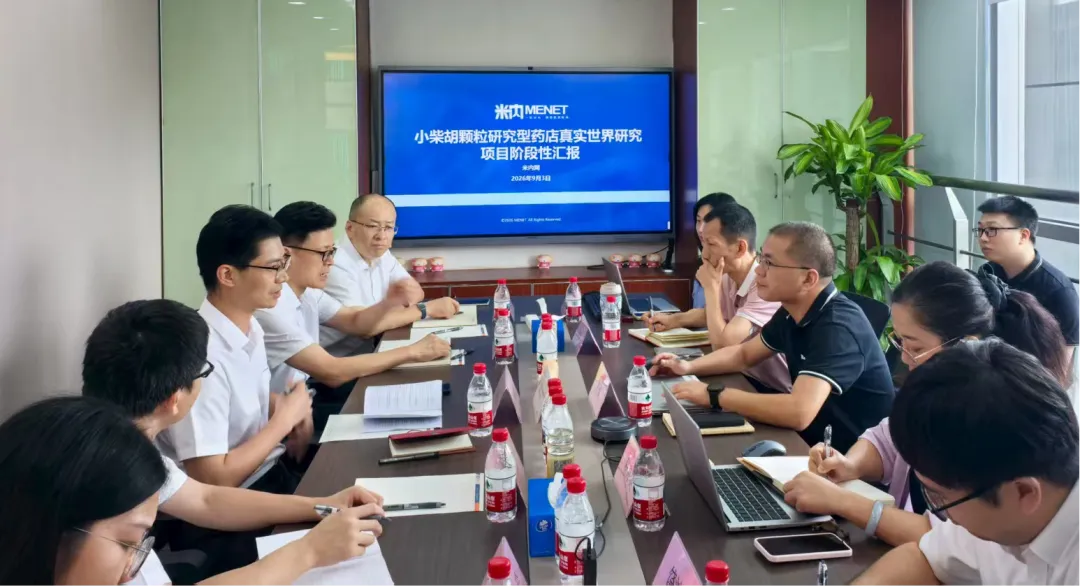
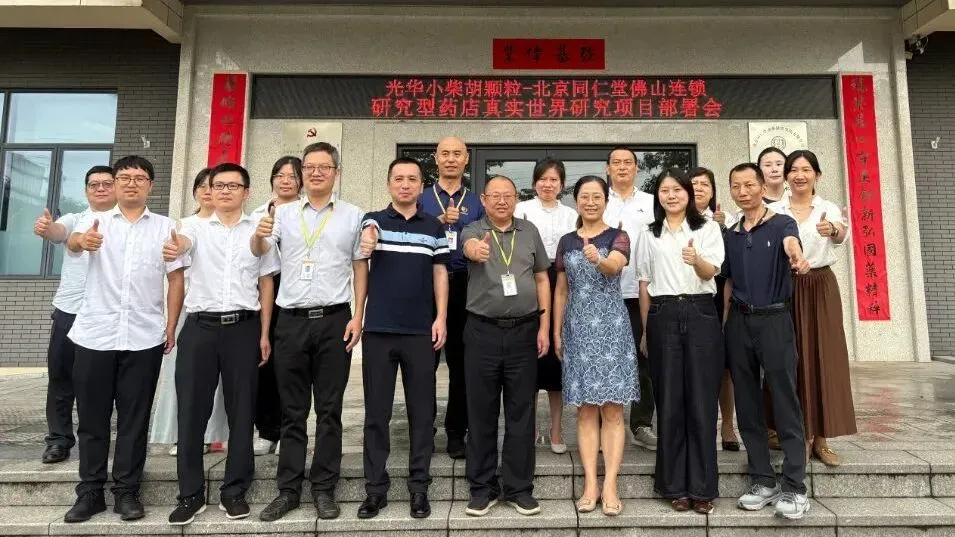
Recently, with the successful conclusion of the stage review meeting of the "Xiaochaihu Granules Research-Oriented Pharmacy Real-World Study Project," the project officially announced its transition from pilot exploration to a new stage of quality improvement and expansion. As the core partner for pharmacy-side implementation and the builder of the quality management system for this project, Guangzhou Evidence-Based Medicine Technology Co., Ltd. participated throughout the trial operation stage and provided a solid quality assurance plan for the next stage of large-scale development.
Laying the Foundation: Building a "GCP-Like" Quality Moat
During the trial operation stage, Guangzhou EBM fully leveraged its professional advantages in TCM clinical research and evidence-based medicine evaluation, combined with risk-based quality management concepts, and led the establishment of a quality management system suitable for real-world research scenarios in pharmacies.
In terms of training and certification, the project implemented a two-stage model of "centralized training + continuous supervision," covering GCP compliance, DCT system operation, and more, and established an assessment and certification system to ensure that relevant personnel are certified before taking up their posts. To ensure training implementation, personnel must pass an examination before joining the project. Through methods such as system permission control, a clear admission system was established, and the principle of "survival of the fittest" was adhered to during implementation, ensuring basic research quality.
Based on data analysis and process review during the trial operation stage, the Guangzhou EBM team summarized as follows: from the perspective of data integrity and process standardization, the current project data is within controllable limits and meets regulatory requirements for participant protection and data privacy management, and is ready for expanded-scale implementation.
Trial Operation Results and Expansion Plan
According to Cheng Mou, the person in charge of pharmacy-side implementation of the project and Vice President of Menet and General Manager of the Resource Platform, as of August 31, 201 cases have been enrolled. At present, the project has completed acceptance and certification of 11 stores of Beijing Tongrentang Guangzhou Chain Pharmacy and Foshan Chain Pharmacy, established a standardized process from application, renovation to acceptance, and plans to expand to chains such as Yifeng, Laobaixing, and Yixintang, expanding to 40 stores in 6 provinces by December, and increasing to 50-60 stores nationwide by June next year.
Cheng Mou stated that the priority cooperation with Beijing Tongrentang Guangzhou Chain Pharmacy and Foshan Chain Pharmacy during the trial operation stage was due to their mature "front shop, back clinic" model, which can reduce initial trial-and-error costs. He pointed out that the chain party independently renovates and accepts, while the execution team is responsible for planning and final certification. This "chain self-builds, team checks" model improves project implementation efficiency. After two months of online operation, the DCT system suitable for clinical use was adapted to the pharmacy real-world research scenario. SOPs have been initially developed, involving 50 SOP documents in 6 aspects including stores, project management, and patient recruitment, with the first round of revision planned for September-October.
Embracing Change: Seizing New GCP Opportunities and Outputting Industry Standards
Vice President Zhang Junhua of Tianjin University of Traditional Chinese Medicine affirmed the preliminary results achieved by the project in store network construction, platform improvement, and quality control experience, and provided guiding suggestions for optimization directions.
Zhang Junhua believes that the current work is still in the preliminary exploration stage, so it is necessary to strengthen experience summarization and tool consolidation. Under the premise of compliance, processes can be simplified to improve efficiency. Zhang Junhua pointed out that the focus of subsequent advancement is to solve three major problems: symptom diagnosis, coding standardization, and "disease-symptom" association. It is necessary to sort out efficiency improvement matters and formulate plans, and submit them to experts for compliance demonstration, thereby deepening quality and efficiency.
Regarding the research depth and achievement transformation of the project, participating experts put forward strategic suggestions: strengthen objective verification and coding of symptoms to ensure data is authentic and verifiable; conduct correlation analysis between symptoms and specific diseases to enhance the practical value of research results. At the same time, transform SOP documents into articles, industry standards, or patents to form reproducible normative achievements; build the optimized DCT system into an industry standard to form a systematic standard for real-world research in research-oriented pharmacies.
Guangzhou EBM will take this as a new starting point, continue to uphold the philosophy of "Evidence-Based Modern Technology, Validating Chinese Wisdom," and escort the nationwide rollout of the project and the high-quality development of traditional Chinese medicine.

With a professional and efficient service system and a comprehensive operational network, Guangzhou Evidence Based Medicine is committed to providing tailored one-stop traditional Chinese medicine research and development full industry chain service solutions for every customer, promoting traditional Chinese medicine to the world and safeguarding the health of more people.
